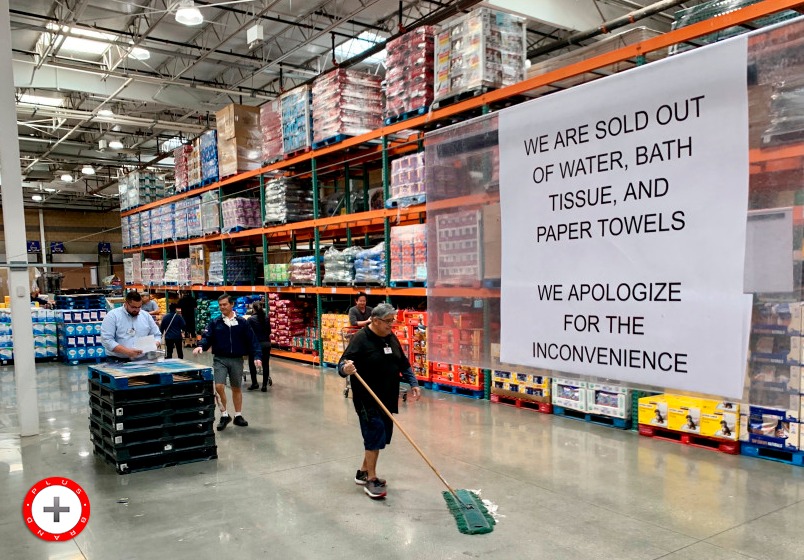
The ongoing Coronavirus (COVID-19) global pandemic is painting a vivid picture of the importance of emergency preparedness. By their very nature, these types of events tend to creep up on us very quickly, leaving little time to “get prepared” once their impact begins to be felt; often in various different ways. Even if you and your immediate family aren’t directly affected by a disease or a natural disaster, the fall-out from the panic that so often ensues usually arrives at your doorstep and impacts daily life in some way, shape or form. The arrival of these types of emergencies serve as a reminder of the importance of being prepared to live without access to certain necessities. Media stories on the lack of toilet paper in major retail locations and stores being completely sold out of water are prime examples.
The following brief list is meant to serve as a starting point for any and everyone who perhaps feels like they haven’t done anything to prepare for events like this. It can often feel overwhelming to begin to research and read about all the things that you should but haven’t done, to prepare your family for COVID-19. Yet doing something is always better than nothing. Equipping yourself and your family with the things on this list will immediately give you a leg up. While you can always do more, it shouldn’t stop you from at least doing the basics.
RICE
You want to have a basic carbohydrate that lasts a long time and goes a long way. Rice is a great way to ensure that you can provide your body with the energy it needs to continue to function. Basmati is gluten-free and contains all eight essential amino acids, folic acid, and is very low in sodium and has no cholesterol. It has a low to medium glycemic index, meaning that energy is released at a slower, steadier rate leading to a more balanced level of energy. Best of all, it’s cheap!
BEANS
Beans like chickpeas and lentils are high in protein and dry store easily. Since they are high in fiber, they also keep you full longer. Beans, like rice, are also quite cheap and ensure that your body gets the protein it needs.
SOUP STOCK
Rice and beans on their own don’t always have the most exciting flavor, even though they are meeting your basic nutritional needs. You can help solve that problem by purchasing several packets of chicken or beef stock.
WATER
Many emergency preparedness recommendations suggest having at least one gallon of water (3.78 L) per person. This provides about a very basic 3 day supply per person and allows some for sanitation purposes as well. Bottles of water can be very handy in terms of portability for both hydration and sanitation. With many stores sold out, buying water online can be a very valuable option in order to have it come right to your door.
TOILET PAPER
When panic ensues, people seem to buy toilet paper! So it’s a good idea to maintain a 1-2 week supply of excess toilet paper; in the event that the stores sell out. Some things you can’t keep your body from doing, regardless of what is available to purchase in the stores!
TOILETRIES AND CLEANING SUPPLIES
Hygiene is particularly important in emergencies in order to keep your immune system strong. Always have extra bars of soap, toothpaste and dish/laundry detergents stored. You will always use these anyways, so it pays to store a small extra supply regardless.
HYDROGEN PEROXIDE
The ability to treat minor cuts and scrapes with a mild antiseptic is important, especially if you have kids. Emergencies make life hard enough and the inability to deal with minor medical issues can make it harder. Hydrogen Peroxide can also be used to help treat fungal and yeast infections as well as some bacterial infections.
FIRST AID KIT
A basic kit to be able to treat minor issues that arise. You can purchase one quite cheap in any major department store.
LIGHT SOURCES
Basic light sources like candles, lighters, flashlights and extra batteries.
PROPANE
Having a full propane tank will always provide you with the ability to cook foods on a bbq in the event that you lose your utility services for a period of time.
Remember, anything you do to get better prepared for COVID-19 is a net positive. The only thing you should avoid is doing nothing! Pick up a few things every time you grocery shop over the next few weeks and you’ll be in a much better position moving forward, without spending more than you can afford all at once.